Thirsty Dogs and Dead Fish: The Beach Hazards Hiding in Plain Sight
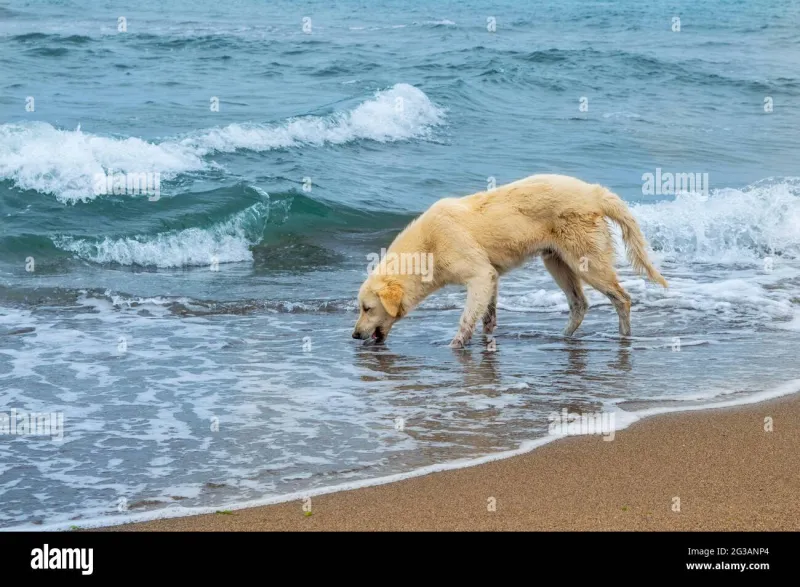
Photo: dog drinking ocean water at beach shoreline, via c8.alamy.com
Your dog's idea of paradise probably looks a lot like Jupiter Beach: waves to splash in, sand to dig, and a whole buffet of questionable things rolling in with the tide. Most beach days end with a sandy, happy, exhausted dog and zero drama. But every so often, a fun afternoon turns into an overnight at the vet — and the culprit is rarely what owners expect.
It's not the jellyfish or the heat (we've covered those). The real troublemakers at the shoreline are quieter: saltwater, dried seaweed, dead fish, and plain old sand.
The Ocean Is Not a Water Bowl
Dogs swim, dogs get hot, dogs drink. And if your pup is paddling in the Atlantic, that's exactly what they're doing — drinking the ocean.
Seawater is roughly three times saltier than your dog's blood. When a dog gulps enough of it, their body tries to dilute the excess sodium, and the gut pulls water in to help. The result is the classic telltale sign every beach vet knows: watery, non-stop diarrhea, sometimes within hours of getting home.
Mild cases usually resolve with rest and access to fresh water. But significant saltwater ingestion can push sodium levels into dangerous territory, causing vomiting, tremors, confusion, and in severe cases, seizures. It doesn't take a marathon swim session, either — a dog that repeatedly laps at waves for an hour can get there.
How much is too much? There's no magic number, but treat any intentional ocean drinking as a problem. Bring a collapsible bowl and a jug of fresh water, and offer it every 20–30 minutes so your dog isn't tempted to self-serve from the surf. If your dog comes home with diarrhea that lasts more than 24 hours, or develops vomiting, wobbliness, or lethargy, give us a call.
Seaweed: Worse Than It Looks
Those dried, crunchy mats of seaweed washed up on the dune line might as well be dog treats as far as your pup is concerned. Many dogs find the smell irresistible.
The problem is what happens after the swallow. Dried seaweed expands dramatically once it hits stomach moisture and digestive fluids. A palm-sized strip can swell into a dense, gluey mass that your dog can't pass — a condition called gastrointestinal impaction. It's one of the more common foreign-body surgeries we see after beach season kicks into gear, and it's almost entirely preventable.
Fresh, wet seaweed is less risky but still not a snack. Teach a solid "leave it" before beach season, and keep your eyes up when your dog is nosing around the wrack line.
Dead Fish, Rotting Crabs, and Other Tide-Pool Terrors
Florida's shoreline delivers a rotating cast of decomposing sea life, and to your dog's nose, a two-day-old fish smells like a five-star meal. Eating washed-up marine life can cause anything from simple dietary upset to true bacterial food poisoning (think Salmonella, Vibrio, and friends). Rotting fish can also contain toxins that don't break down with decomposition.
Symptoms to take seriously after a beach snack include:
- Repeated vomiting or diarrhea
- Drooling or pawing at the mouth
- Trembling, weakness, or stumbling
- A bloated, tight, or painful belly
If your dog raids a fish carcass and seems off within a day or two, don't wait it out. Call us — and if they're collapsing or having tremors, that's an emergency, full stop.
The Sand Problem Nobody Thinks About
Here's the sneaky one. Dogs that spend an afternoon digging to China, fetching balls that land in the wet sand, or gobbling treats dropped on the ground inevitably swallow sand. A little passes without incident. A lot — and some enthusiastic diggers swallow a lot — can compact in the intestines.
Sand impaction builds gradually. Dogs may go a day or two looking mildly uncomfortable before vomiting sets in and the belly becomes visibly distended. By the time they're refusing food, they usually need fluids, imaging, and sometimes surgery.
The fix is simple: pack a towel, wipe the paws, and don't let fetch sessions turn into sand-eating contests. A ball coated in wet sand delivers more than you'd think.
Your Post-Beach Checklist
A few minutes of vigilance at home can save you a very long night:
- Rinse and inspect. Hose your dog off (fresh water only, no soap needed) and check ears, paws, and between toes for tangled seaweed, shells, or debris.
- Hydrate with fresh water. Keep the bowl full all evening.
- Watch the poop. Diarrhea that's watery, very dark, or contains sand warrants a call.
- Monitor appetite and energy. A tired dog is normal. A dog that won't eat, won't get up, or keeps vomiting is not.
When to Make the Call
Come see us at Jupiter Veterinary Center if your dog shows persistent vomiting or diarrhea beyond 24 hours, a swollen or painful abdomen, tremors, disorientation, or signs of dehydration like sunken eyes and sticky gums. And if you know your dog swallowed a big chunk of dried seaweed or a rotting fish, don't wait for symptoms — early intervention is always easier on your dog and your wallet.
The beach is one of the best things about living here with a dog. A little preparation keeps it that way — so the only thing your pup brings home is sand in the car seats.