Washed Up and Dangerous: Why Your Dog Should Never Greet a Beached Jellyfish
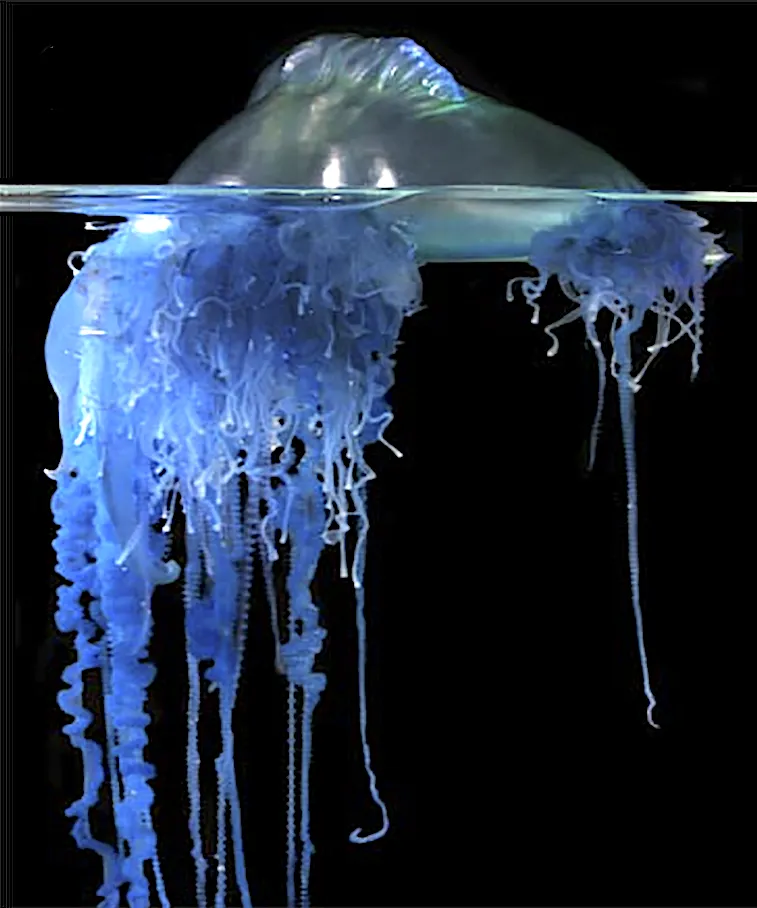
Photo: Rebecca R. Helm. Image by Denis Riek., CC BY-SA 4.0, via Wikimedia Commons
Walk any Jupiter beach after a windy day and you'll spot them: translucent, balloon-like blobs stranded at the tide line, their long tentacles trailing behind them like party streamers. To you, they're an obvious hazard. To your dog, they're the most interesting thing to sniff all week.
That curiosity is exactly the problem. Every year, dogs along the Treasure Coast end up in emergency clinics after poking, licking, or stepping on beached jellyfish and Portuguese man o' war — and here's the part that surprises most owners: a man o' war can still deliver a full-power sting even when it looks completely dead.
The Wash-Up Season Is Real
Southeast Florida sees jellyfish and Portuguese man o' war strandings most often when east winds push warm-water swarms toward shore, typically in late fall through spring. After a rough stretch of weather, the tide line can be littered with them for days.
Lifeguards and beach safety crews often post purple warning flags or advisory signs when stingers are present. If you see one at Carlin Park, Jupiter Beach, or DuBois Park, take it seriously — not just for your own ankles, but for the four sets of paws trotting beside you.
Why a Beached Stinger Is Still a Stinger
Portuguese man o' war aren't true jellyfish, but their sting is far more potent. Their tentacles can stretch several feet — sometimes 30 feet or more in the water — and the stinging cells (nematocysts) stay armed long after the animal washes ashore. Dried-out tentacles on hot sand can still fire when touched.
Dogs are especially vulnerable because they investigate with their noses and mouths. A sniff turns into a lick turns into a mouthful of stinging cells. Muzzle and tongue stings are the most common injuries we see, and they can cause rapid, dramatic swelling that compromises breathing in smaller dogs.
Warning Signs Your Dog Got Zapped
Sting symptoms can appear within minutes. Watch for:
- Sudden yelping, head shaking, or pawing at the face
- Drooling, lip swelling, or visible welts on the muzzle or tongue
- Pawing at or limping on a stung leg
- Vomiting, wobbliness, or collapse
- Difficulty breathing or a swollen throat
Even a mild-looking sting deserves a call to your vet. Reactions can escalate, and dogs that swallow tentacles can develop GI upset on top of everything else.
First Aid on the Sand
If your dog gets stung, act fast but stay calm:
- Get away from the water and the wash-up zone. Don't let your dog roll or rub the affected area in the sand.
- Rinse with seawater — never fresh water. Fresh water triggers remaining stinging cells to fire. Keep a jug of ocean water handy and flush the area thoroughly.
- Remove tentacle fragments carefully. Use a stick, credit card edge, or gloved hand. Never bare fingers.
- Do not rub, or apply urine, alcohol, or vinegar for a suspected man o' war sting — vinegar can actually worsen nematocyst discharge in these animals.
- Head straight for veterinary care, especially with any face, mouth, or throat involvement.
Keep your vet clinic's number and the nearest animal emergency hospital saved in your phone before beach season, not after the incident.
Know When to Skip the Beach Entirely
Sometimes the smartest move is choosing a different day or a different destination. Consider staying away from the shoreline when:
- Purple flags or jellyfish advisories are posted
- You can see multiple strandings along the tide line
- Winds have been blowing steadily onshore after a storm
- Your dog is a chronic "everything goes in the mouth" type (you know who you are)
An inland walk, a sniffari through a neighborhood preserve, or a backyard play session beats a trip to the emergency clinic every single time.
The Bottom Line for Jupiter Dog Owners
Our coastline is one of the best parts of living here — and sharing it safely with your dog just takes a little awareness. Check the tide line before you settle in, keep leashes on near washed-up debris, and pack seawater-safe rinse supplies in your beach bag.
And if your pup does tangle with a stinger? Call us. We'd much rather answer a nervous phone call than treat a swollen muzzle — but we're ready for either.
Have questions about beach safety or sting first aid for your pet? Give Jupiter Veterinary Center a call or schedule a wellness visit. Compassionate care for every paw, from the sand to your living room floor.