Cats Are Masterful Liars: The Quiet Signs of Aging You're Probably Missing
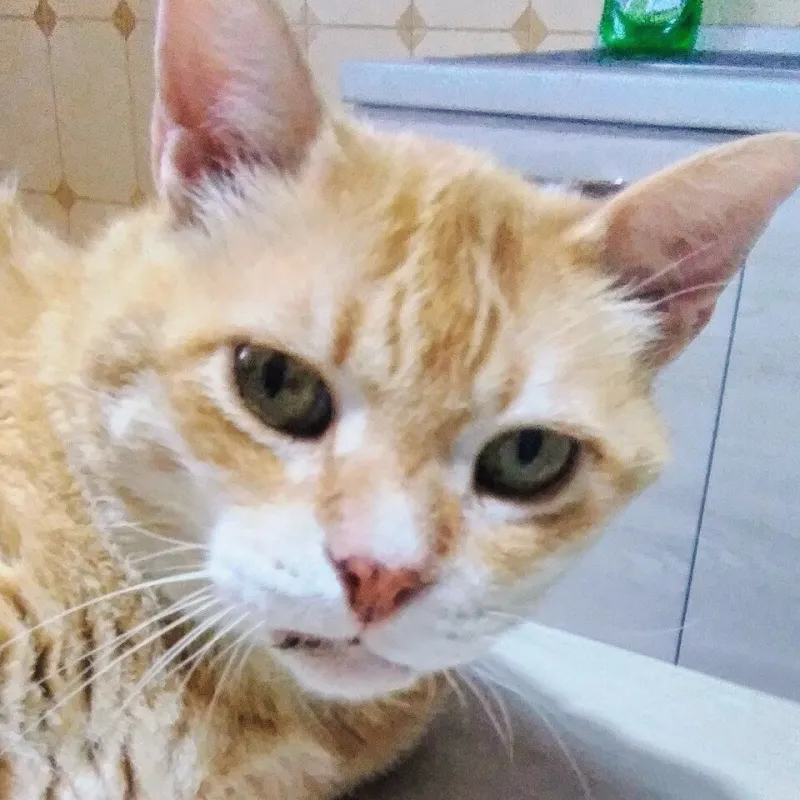
Photo: Jeanne Griffin, CC BY-SA 4.0, via Wikimedia Commons
If your cat has started taking the stairs one at a time, or hopping down from the couch instead of leaping, you've probably told yourself what most cat owners do: she's just getting older.
Here's the uncomfortable truth we share with every senior cat parent who walks into our Jupiter exam rooms — cats don't slow down because of age. They slow down because something hurts or something's failing. Age is a number; the shuffle is a symptom.
Why Cats Hide Everything
Your housecat shares instincts with her wild ancestors, and those ancestors had a simple rule: show weakness, become someone's lunch. So cats mask pain and illness with remarkable skill. By the time a cat is obviously sick — not eating, hiding, vocalizing — the underlying problem has often been brewing for months or years.
That's why the burden of detection falls on you and on routine screening, not on dramatic symptoms.
The Big Three We Screen For
Arthritis. More than half of cats over 10 have some degree of joint pain, and almost nobody notices. The signs are subtle: hesitating before jumping, grooming less along the back and hips, missing the litter box because the high sides are hard to clear, or sleeping in lower spots than she used to. Unlike dogs, cats rarely limp. They just quietly opt out.
Kidney disease. Chronic kidney disease affects a huge share of senior cats, and it's sneaky. Early signs are easy to rationalize — drinking a bit more water, a slightly bigger litter box clump. By the time a cat stops eating, significant kidney function is already gone. Caught early, we can manage kidney disease with diet, hydration support, and medication for years.
Hyperthyroidism. An overactive thyroid is almost the opposite problem — your cat seems great, eating more, maybe even acting younger. But that revved-up metabolism is quietly straining the heart and kidneys. A simple blood test catches it, and treatment options range from daily medication to a permanent cure.
The Case for Twice-Yearly Exams
Here's a useful way to think about it: one year of your cat's life equals roughly four to seven human years. An annual exam for a senior cat is like you seeing your doctor every four to seven years. A lot can change in that gap.
For cats seven and up, we recommend exams every six months with senior bloodwork and a blood pressure check. It takes one quick visit to catch kidney disease at stage two instead of stage four, or to spot that thyroid trend before it damages the heart. Most of the time, the news is good — and that's worth the trip too.
Keeping a Senior Cat Moving Through a Florida Summer
Jupiter cats live the indoor life for good reason — our heat, traffic, and wildlife make outdoors a rough neighborhood. But indoor senior cats in air conditioning all summer can drift into stiffness and weight gain, which makes arthritic joints worse.
A few easy wins:
- Ramps and steps to favorite perches, so she keeps using them
- Short play sessions — two five-minute wand toy games beat one marathon
- Food puzzles to turn mealtime into gentle activity
- A low-sided litter box on every floor she uses
- Vertical space she can actually reach — a stepstool in front of the cat tree counts
The Bottom Line
'Slowly getting slower' isn't a diagnosis, but it is a reason to call us. If your senior cat has changed anything about how she moves, eats, drinks, or uses the litter box, that's your cue. The cats who do best in their golden years are the ones whose people stopped accepting 'just old age' as an answer.
Schedule a senior wellness exam and let's get a baseline. Your cat may never thank you — but she'll be feeling too good to hold a grudge.