That Chip in Your Dog's Shoulder Is Only as Good as Your Phone Number
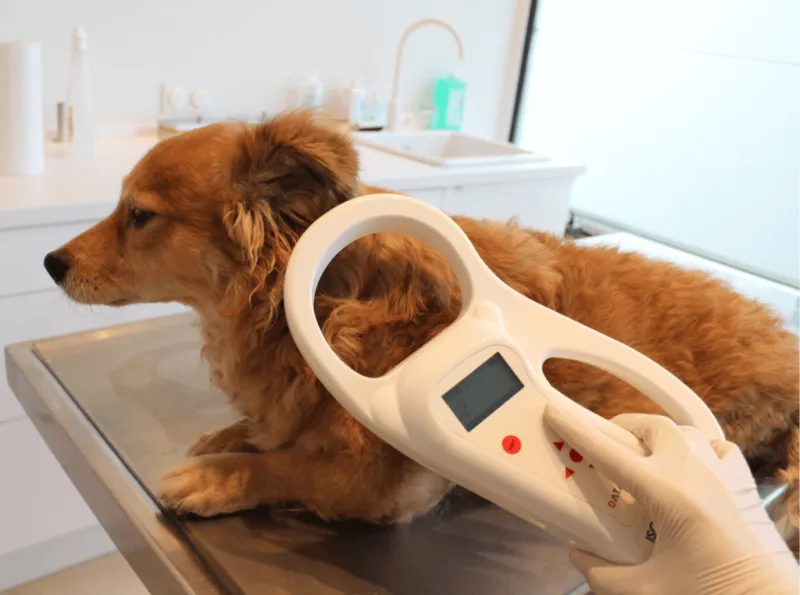
Photo: veterinarian scanning dog for microchip with handheld scanner, via completepetfood.co.za
Every year, shelters and vet clinics across Palm Beach County scan hundreds of lost pets. Some of those scans lead to joyful reunions in the parking lot within the hour. Others lead to a dead end — a chip number that points to a disconnected phone number, an old address in another state, or a registration that was never completed at all.
The heartbreaker? The technology worked perfectly in every single case. The chip was there. The scanner read it. What failed was the paperwork on the other end.
What a Microchip Actually Does (and Doesn't Do)
Let's clear up the most common misconception we hear at the front desk: a microchip is not a GPS tracker. There's no signal, no app, no live location. It's a tiny passive transponder — about the size of a grain of rice — implanted under the skin between the shoulder blades. It carries no battery and does nothing until a handheld scanner passes over it.
When that happens, the chip transmits a unique identification number. The person scanning then looks that number up in a registry database, which is where your contact information lives. That lookup is the entire magic trick. Chip plus scanner plus accurate registry entry equals reunion. Remove any one of those three, and the system stalls.
Where the System Breaks Down
Industry research has consistently found that a large share of microchipped pets who end up in shelters can't be returned home — and the overwhelming reason isn't chip failure. It's registration failure.
The most common scenarios we see:
- The chip was implanted, but registration was never finished. Some pets leave the clinic or adoption event before the paperwork is completed online. The chip exists; the database entry doesn't.
- Life happened. People move, switch phone carriers, change email addresses. A chip registered to a 2019 phone number is functionally anonymous.
- The pet changed hands. Rehomed pets, inherited pets, and adopted pets often carry chips still registered to a breeder, a previous owner, or a rescue organization three states away.
When a Jupiter pet arrives at a shelter with a chip that traces nowhere, staff do their best — they'll call the registry, check secondary databases, sometimes even track down the original implanting clinic. But every dead end adds days. And days matter when a scared pet is sitting in a kennel instead of on your couch.
What Actually Happens When a Stray Arrives
Here's the typical local sequence: a good Samaritan brings a found pet to a shelter, animal control facility, or participating vet clinic. The first thing that happens, before anything else, is a scan — often in two patterns, because chips can occasionally migrate slightly from the implant site.
If a chip is found and the registry has current information, the owner usually gets a phone call within the hour. If the information is outdated, the facility may send a letter to the address on file — a process measured in days, not minutes. If there's no registration at all, the pet enters the stray hold period like any unidentified animal, and the clock starts running on how long the facility must care for the pet before other outcomes become possible.
Five minutes of registration upkeep is the difference between that first phone call and everything that follows.
Your Five-Minute Fix: A Step-by-Step Check
You don't need to remember where your pet's chip came from or which company made it. Here's the process:
- Find the chip number. Check your adoption paperwork, vaccination records, or the certificate from your spay/neuter or wellness visit. Can't find it? Any of us at Jupiter Veterinary Center can scan your pet in seconds — no appointment needed for a quick chip check.
- Use a universal lookup. The AAHA-affiliated site petmicrochiplookup.org searches across the major US registries from a single chip number, so you don't have to guess which company holds the record.
- Verify the entry. Is your current phone number listed? Your current address? Is the pet registered to you — not a breeder, not a rescue, not an ex?
- Update everything. Most registries let you edit contact details online for free. Some charge a one-time fee for new registrations; it's the cheapest insurance policy in the pet world.
- Add a backup contact. List an out-of-state relative or a trusted friend. If a hurricane knocks out local phone service — a real consideration in our part of Florida — that secondary contact becomes your lifeline.
Set a calendar reminder to repeat this check once a year. Tie it to something memorable: your pet's birthday, the start of hurricane season, your own annual physical.
A Chip Is the Backstop — Not the Whole Plan
We're chip evangelists, but a microchip works best alongside the low-tech tools: a collar with an ID tag, a current photo of your pet on your phone, and a recent photo you can actually find when you're panicking. Tags let a neighbor call you directly without a scanner involved. Chips cover the scenario where the collar is gone.
And if you've recently adopted, moved to Jupiter, or welcomed a new pet into the family, bring them by. We'll scan the chip, confirm it reads correctly, and help you get the registration squared away on the spot.
The lottery framing in our headline is only half true. For registered pets, reunion odds are genuinely excellent. The winning ticket is already under your pet's skin — all you have to do is sign the back of it.